+86 88802688 ylj@gd-ylj.com ![]() +86 13670608306
 +86 13670608306

Views: 0 Author: Site Editor Publish Time: 2026-11-03 Origin: Site
On January 27,2026, the Australian Anti-Dumping Commission issued a sixty-day progress report on Investigation No.691. The conclusion was measured: based on the evidence available at the time, it could not be determined that the Australian industry had suffered damage from dumping or subsidies from products originating in China. Therefore, no provisional measures were taken.
At that time, many people breathed a sigh of relief.
Nine months later, on October 14, the same institution issued Announcement No.2026/147, determining that aluminium doors and windows imported from China were being dumped, with the subsidies primarily falling on companies that did not cooperate with the investigation. The anti-dumping duty reached a maximum of 70.4%, while the countervailing duty was 2.9%. When combined, the maximum margin requirement for deposits reached 73.3%. Starting from the following day, when goods are imported into Australia, the required funds must be deposited during customs declaration.
The announcement contains not a single word about what actually happened during these nine months.
It is stated outside the announcement.
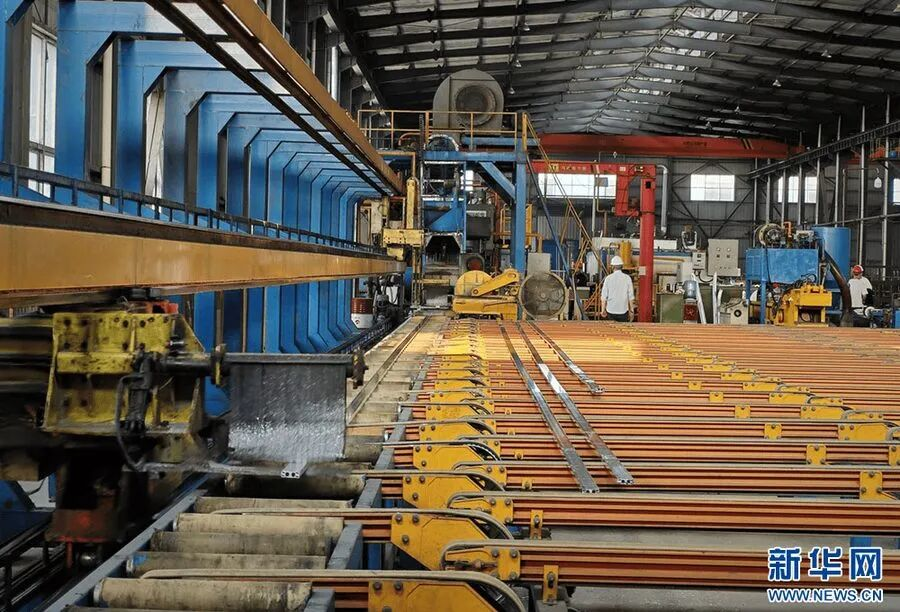
Aluminium profile extrusion production line. China has made this process the cheapest in the world.
03
The accounts for those six months were recorded in inventory.
Why 2025?
You'll see once you look at another market.
From the second half of 2024 to 2025, real estate in China is undergoing a deep adjustment. There are more stationary tower cranes on construction sites than those in motion. Doors and windows follow the movement of the property developments; if the developments stand still, the production lines become idle. Production lines cannot stop—once they do, molds, equipment, and workers are scattered at a moment's notice.
And so the goods began moving out.
Australian local manufacturers told 7NEWS that the quotes for China engineered wood products and aluminium doors and windows in Australia are approximately half the price of local products.
Half. This figure needs no explanation; it speaks for itself.
The problem is that the same business decision, when viewed from a different perspective, can have a completely different form.
In the eyes of the factory owner, this is about clearing inventory, preserving cash flow, and keeping several hundred employees employed.
In the eyes of Capral, a pressing plant in Australia, this is someone offering half the price to poach one customer after another who had built up their relationship over twenty years.
In the eyes of the investigation officer, this constitutes "sales below normal value."
Three sets of facts: the trade remedy machinery recognizes only the final set.
Thus, the first thing that was "done incorrectly" was actually reaching in the wrong place:
They have treated domestic cyclical exports as the norm in overseas markets.
Inventory will eventually be cleared. However, the price quoted when clearing the stock will be recorded in the case file and serve as a benchmark for comparison over the following several years.
In 2024, China's exports of aluminium doors and windows to Australia amounted to approximately USD 373 million, making Australia the largest export market for this product category.
04
The concept of standards has been turned into a weapon by others.
In February 2026, AGWA released the results of a test.
Among the eight aluminium alloy door and window samples imported from China, seven were found to be non-compliant. The benchmark is AS 2047—the mandatory standards in the Australian National Building Code System for external wall windows, framed sliding doors, and flush glass doors, covering pipe structure, pipe manufacturing, pipe testing, and pipe installation.
According to Ventora, non-compliant items involve substantial water ingress, which can cause carpets and walls to become damp or even develop mold; if a large door leaf detaches, it poses a direct risk to personal safety.
None of these statements is false.
However, one other point needs to be clarified: Ventora, which commissioned this test, is one of the joint applicants in this anti-dumping and countervailing duty case. AGWA, which announced the results, is another applicant.
AGWA emphasizes that the experiments were carried out by a recognized independent laboratory. That is not incorrect either.
Two things hold true simultaneously: testing may be objective, while its purpose may be selective.
The timeline is as follows: on January 27, the authorities stated that there was insufficient evidence; in February, the quality report was released; and on October 14, a positive preliminary decision was issued. In between, more than 400 stakeholder comments were incorporated.
Thus, the second "mistake" came to light:
We treat standards as admission tickets; others treat them as weapons.
AS 2047 did not emerge today; it has been in effect in Australia for many years. In the past, doors and windows from China could be installed because importers would arrange their own testing and bear the risks themselves, internalizing compliance costs within their supply chains. On the factory side, "compliance with standards" was treated as a phrase that could simply be printed on brochures.
It wasn't until someone finally took the matter seriously, testing each item one by one and slamming the report onto the table, that they realized they had no report they could present—one that had been prepared according to the other party's methodology and issued by a third party.
Certification has never been merely a matter of technology. It is like a chair: if you don't sit in it, someone else will sit for you.
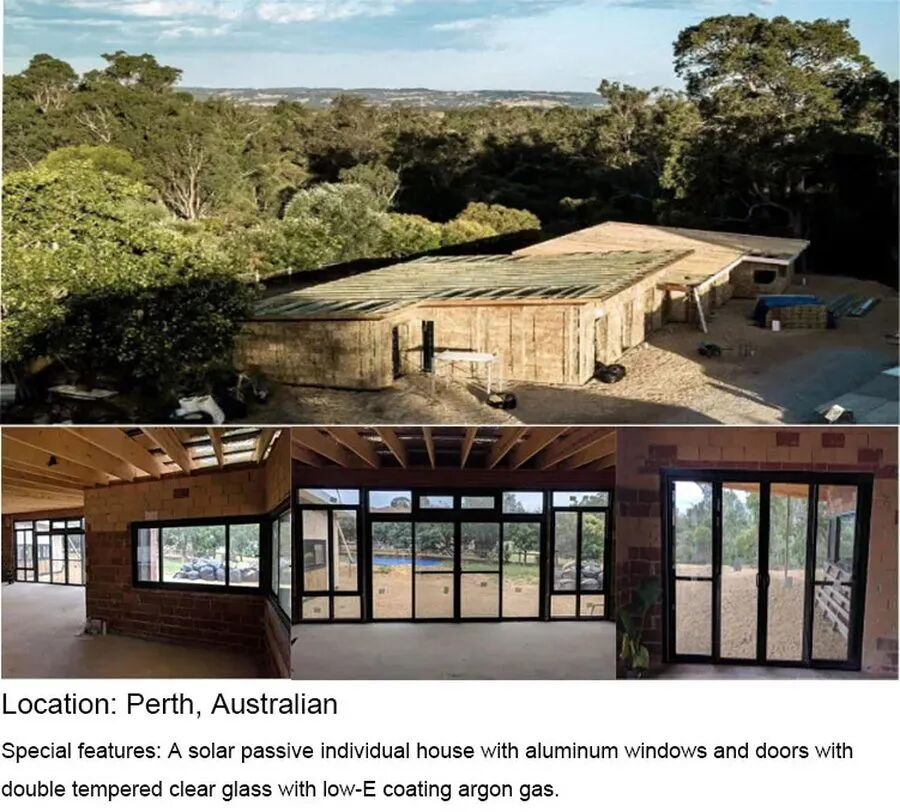
Aluminium alloy doors and windows are widely used in Australian residences; they are not merely an optional choice.
05
We should also go through the account on the other side.
At this point, if we merely focus on criticizing Chinese enterprises, this article would be too superficial.
Look over at the other side.
The final recommendation in this case is to be submitted to Minister for Industry and Innovation Tim Ayres. Over the past two years, Mr.Ayres has been securing government subsidies for struggling Australian metal smelters.
The Albanese government has pledged to invest approximately A$4.7 billion to support aluminium smelters in Tasmania, Queensland, and New South Wales. Rio Tinto's Tomago smelter in New South Wales will also be eligible for a discounted feed-in tariff from the federal government's Snowy Hydro hydropower plant.
While accusing others of receiving subsidies through electricity tariffs and credit facilities, they simultaneously provide funds to their own smelters and offer discounted electricity rates.
This may not necessarily constitute double standards. Industrial security and supply-chain self-reliance are, fundamentally, considerations that every country is taking into account. The United States is doing so, the European Union is doing so, and Japan is doing so.
But one thing is certain: once a country begins subsidizing its upstream sector, it must provide a justification for its downstream sector. The easiest justification is to shift the tariffs outward.
What is even more subtle are the downstream accounts.
The Australian government's target is to build 1.2 million new homes over fifteen years. To achieve this, costs must remain controllable and the supply chain stable.
Aluminium prices are currently falling. Over the past month, LME aluminium prices fell 9%, reaching $3,008 per ton—the lowest level since February. With raw materials becoming cheaper, housing prices should also come down somewhat.
However, prices for doors and windows are expected to rise.
That 19% share is kept out by a 73.3% margin requirement; whether domestic production capacity—79% of it—can keep pace in terms of delivery lead times, quality, and pricing is a different matter altogether. If it cannot keep pace, the shortfall will manifest as price hikes and delays in project timelines.
Professor Zhou Weihuan of the University of New South Wales put it plainly: security deposits will drive up the prices of imported doors and windows, thereby increasing the construction costs for commercial and residential buildings.
He also has a more interesting point to make—China is unlikely to take retaliatory measures, as historically, China's countervailing and anti-dumping actions against Australia have been far fewer than Australia's against China. But if it really goes to war, agricultural products could be the target.
That was put politely. Translated, it means: This isn't over yet, but it probably won't blow up right here.

Australia's construction industry is currently under triple pressure from rising labor costs, volatile building material prices, and project delays.
06
So, what exactly went wrong?
Returning to the question in the title.
"What did I do wrong?" —this way of phrasing the question carries a hint of grievance. It seems as though, once the mistake has been identified and corrected, one can simply return to the way things used to be.
Trade remedies are not a moral judgment; they are a set of procedures. These procedures ask only three questions: whether you have sold at low prices, whether you have received subsidies, and whether the local industry has suffered damage as a result. As for why you sold at low prices, whether your workers have adequate food, or whether your production lines can afford to shut down—those questions are not asked.
Therefore, the true answer may perhaps be put differently: it is not that something was done incorrectly; rather, something was simply not done enough.
I have listed five points, all of which are very specific.
First, responding to a complaint is a threshold that cannot be bypassed. The figure of 70.4% has little to do with how aggressively the defendant engages in dumping; it applies to companies that remain silent. Among the seven companies on the list that cooperate, the tariff rates range from 0% to 51.6%; those that do not cooperate are uniformly subject to a rate of 70.4%. The disparity between these two figures is greater than any technological improvement. Responding to a complaint entails spending money, providing data, hiring lawyers, and having one's cost structure laid out for scrutiny—all of which are uncomfortable undertakings. Yet being uncomfortable is a completely different matter from facing a rate of 73.3%.
Second, beyond price, there needs to be a second language. A window should not be described merely as "cheap." Delivery lead times, airtightness and watertightness, wind pressure resistance, hardware service life, after-sales responsiveness, and carbon footprint—all of these are valid points of discussion. In the past, they were simply not necessary to mention: once the price was disclosed, everything else became irrelevant. Now that price alone no longer suffices, we realize that we have long since forgotten the other aspects of the conversation.
Third, localization serves as a moat. A 19% market share consists entirely of imports. There are no local factories, no local workers, and no local tax base. This means that when someone tries to take action against you, there is no one in parliament to speak on your behalf, no one in the newspapers to write letters for you, and no one in the community who believes that unemployment is connected to this issue. Conversely, behind those 79% lie tens of thousands of votes. This has nothing to do with conspiracy; it is simply a structural reality.
Fourth, the curtain wall's exclusion this time was merely a fluke; do not take it as a permanent advantage. Curtain walls have been excluded because they are so complex that they cannot be easily compared on a price basis. However, as prefabricated assembly, unitary systems, and standardized modules advance, this "complexity" will gradually diminish. What cannot be compared today may become comparable tomorrow. Instead of feeling fortunate simply because you are not on the list, you should, while still not on the list, build up local certifications, a local technical team, and a track record of local project experience. When your turn comes, you should have the cards in hand.
Fifth, learn to speak in the other party's own terms. AS 2047 is right there—you can use it as a framework for navigating processes, or simply apply it as a tool. Use its methodology to conduct your own assessments, identify laboratories that recognize its standards, and issue its reports; this transforms compliance from a cost item into a qualification. When others apply standards against you, you must hold the same standard in your hand.
As for re-exporting goods—whether to Malaysia or to a third country—that is merely a stopgap measure. Over the past few years, the rules of origin have become increasingly stringent; the end of any detour is another announcement.
I have read this announcement several times.
The most jarring part is that zero.
The same country, the same product, the same questionnaire. One company scored 0, while another scored 51.6%.
What lies between them is actually quite simple: some people have submitted their materials, while others have not.
One window crosses the equator; in the end, it turns out to be this one.
Having worked in this field for so many years, we have made our profile output the highest in the world, driven costs down to levels that others dare not even imagine, and shortened delivery lead times to a matter of days. These are genuine achievements.
It's just that, this time, your opponent isn't competing with you in the workshop.